Feb. 2, 2026
Bleeding from the Rectum: Common Causes and Treatment Guide

Hannah Systrom, MD

Jump to
Book a visit
Rectal bleeding
$$25 typical copay
$100 without insurance
Experiencing rectal bleeding? Get the care you need to address your symptoms and get back to feeling your best. Book an evaluation today.
Seeing blood in the toilet or on toilet paper after going number two can understandably ding the alarm bells in your brain. You might be wondering if you need to talk to a doctor, and the short answer is yes. But don’t panic. Sometimes rectal bleeding is a common minor issue. The bottom line is to get checked out.
In a famed Portlandia sketch, people call 9-1-1 after seeing blood in the toilet. The dispatcher asks them what they had for dinner before confirming, “I promise it’s not blood; it’s beets.”
That might be the first rule of addressing any red stuff in the toilet: Do a mental review of your recent meals. Beets and other crimson foods, or food with red dye, can indeed turn your stool red.
But what you are seeing might indeed be blood. Understandably, seeing blood in the toilet or on a wad of Charmin can be distressing—because, quite frankly, it’s not supposed to be there. So what should you do if you’re bleeding from your bottom? The answer is to talk to a clinician for medical advice.
“The appearance of the bleeding usually doesn’t provide an accurate diagnosis for the cause, so a medical investigation is warranted,” says David Clarke, MD, who is board-certified in internal medicine and gastroenterology and is the president and cofounder of the Association for the Treatment of Neuroplastic Symptoms.
In this article, we explore bleeding from the rectum, what it means to have blood in your stool, what black poop is a sign of, and more.
Understanding rectal bleeding: What it is
Bleeding from your anus can appear in a few different ways, including:
- Red or pink streaks on stool
- Red or pink streaks on toilet paper after wiping
- Red or bloody stool
- Black or tarry stool or poo that looks like coffee grounds
- Gel-like mucus mixed with pink or red
“There are many conditions that can cause rectal bleeding that range in concern from minor and able to heal with minimum intervention (small hemorrhoids or anal fissures),” Dr. Clarke says, “to more serious diagnoses that can even be potentially life-threatening in the medium term (inflammatory bowel disease, cancer) or even life-threatening in the short term (bleeding from a diverticulum or ulcer).”
Again that all sounds scary, but the first step you need to take is simple. If you notice blood in your stool, note how it looks. This is important information to relay to a clinician. They can use your descriptions to help identify potential causes and the course of treatment if needed.
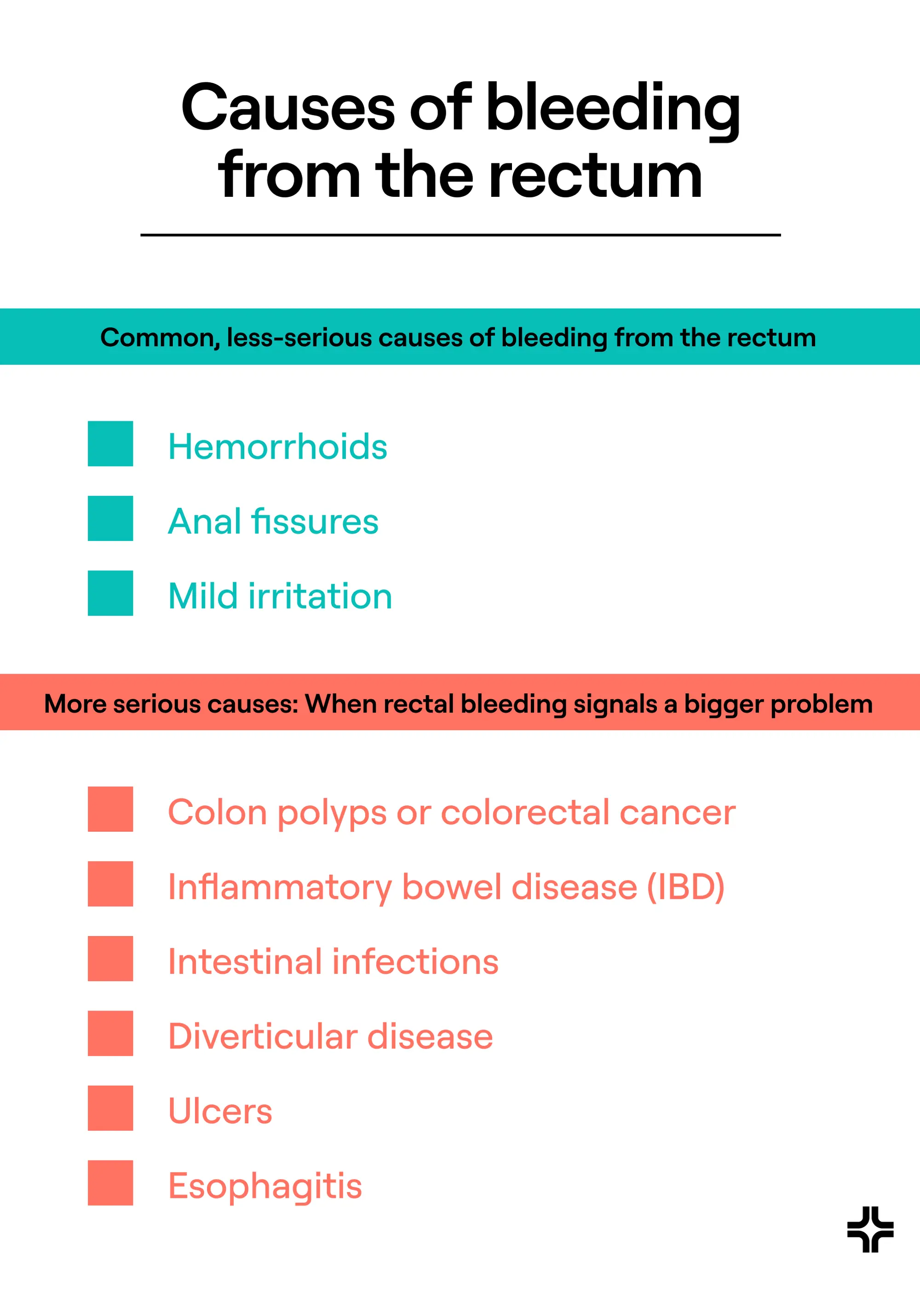
Causes of bleeding from the rectum
“The closer the source of bleeding is to the anus,” Dr. Clarke says, “the less time the blood has to break down chemically. Bleeding that reaches the anus quickly is therefore usually still red in color. Bleeding that reaches the anus after some time (such as from a peptic ulcer in the stomach) is usually darker red or black.” It is also typically darker or black because it has been digested by stomach acid from higher up.
He adds that some medications or foods can also cause melena, black or tarry bowel movements. Meds and supplements that can cause this include iron, bismuth subsalicylate (e.g., Pepto-Bismol), activated charcoal, and more. Foods that can cause black stool include black licorice, blueberries, blood sausage, iron-rich foods (e.g., red meat and spinach), and dark chocolate.
The table below provides a summary, but we’ve included detail on various potential conditions in the next section.
What blood color and appearance can tell you:
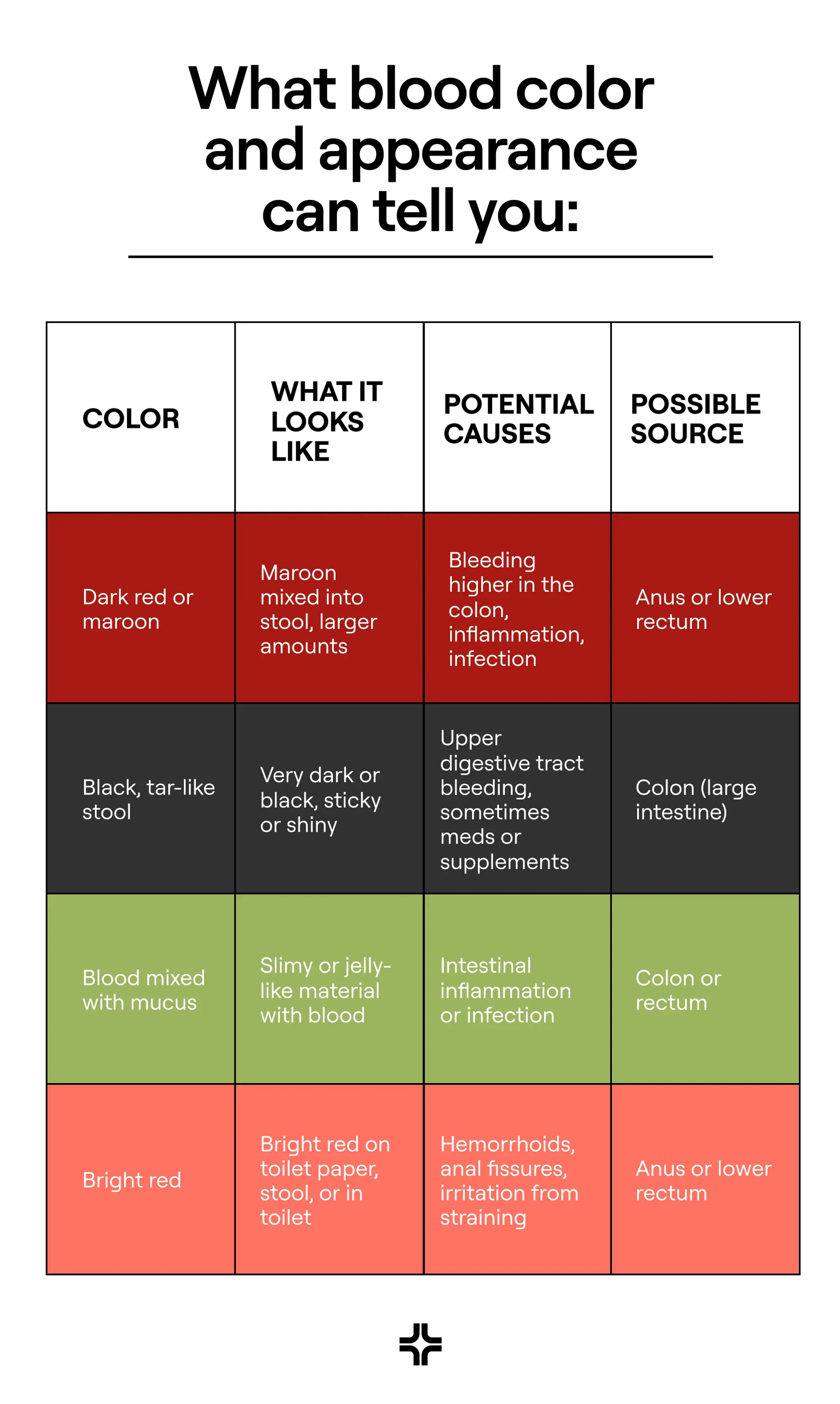
What blood color and appearance can tell you
Common, less-serious causes of bleeding from the rectum
The following are some commonly seen causes of rectal bleeding. The good news is that most people who experience anal bleeding have one of these minor issues going on, rather than a more serious concern. Often, the amount of blood seen in the toilet or on the toilet paper can appear to be more than you are actually losing. But even though these conditions aren’t medical emergencies, you should still consult a provider if you see blood in the toilet or on the paper.
Hemorrhoids
In case you had a bit of FOMO (fear of missing out) going on, here’s a fun fact: Everyone has hemorrhoids, also called piles. In another fun fact, they likely serve the purpose of keeping poo from leaking out of your anus.
They are made of muscle and other connective tissue and blood vessels. Some people don’t have symptoms from hemorrhoids, but about 75% of people in the United States will experience discomfort. Symptoms include burning, itching, pain, constipation, and more.
Hemorrhoids can cause symptoms when they become inflamed from excess pressure. Pressure can result from straining during bowel movements, constipation or diarrhea, pregnancy, obesity, or sitting for lengthy sessions. Hemorrhoids can sit inside the rectum or prolapse, push out of the anus.
Hemorrhoids sometimes bleed, leading to red streaks on toilet paper often with wiping or blood in the stool itself. Since the blood is fresh, it generally appears bright red. It is common to have bleeding from your anus with no pain with this condition. Increasing dietary fiber and trying over-the-counter options like Preparation H can be helpful.
Anal fissures
An anal fissure is a small tear in the anal lining caused by a trauma or irritation. Constipation or passing hard stools, frequent diarrhea, anal penetration, childbirth, and more can all cause fissures. An estimated 240,000 to 342,000 cases occur each year in the United States. Symptoms of an anal fissure include pain during and after pooping and bright red blood in stool, in the toilet, or on toilet paper.
Mild irritation
Mild irritation can also cause rectal bleeding. For example, if you’ve been experiencing an uptick in bowel movements, leading to more frequent wiping, you might experience. Over time, that irritation can break down the skin barrier of this sensitive area and lead to minor bleeding. Generally, this type will appear as bright red blood on toilet paper.
More serious causes: When rectal bleeding signals a bigger problem
The following conditions are more serious in nature and may require immediate or urgent attention. However, just because you have rectal bleeding doesn’t mean you have one of these conditions. That’s why getting checked out by a medical professional is important.
Colon polyps or colorectal cancer
Colon polyps are growths on the colon lining. They’re common, occurring in 30% of people over age 50. Your risk for these growths increases with age.
In many cases, colon polyps are benign (noncancerous), but they may be precancerous or cancerous. Getting all your recommended colonoscopies helps detect and remove polyps for cancer prevention.
Polyps, however, can bleed. And rectal bleeding can be a sign of colorectal cancer. More than 95% of colon cancers originate from polyps. Bleeding is usually bright or dark red, and mixed with stool, dripping into the toilet, or present on toilet paper.
Inflammatory bowel disease (IBD)
IBD is an umbrella term for conditions including Crohn’s disease and ulcerative colitis. Both diseases cause inflammation in the digestive tract that can lead to rectal bleeding. However, blood in the stool is more common with ulcerative colitis, from ulcers that bleed. Anal fissures are also common with inflammatory bowel disease (IBD). Bleeding from IBD may appear bright or dark red or even black and tarry, and it may also contain mucus.
Intestinal infections
You might experience rectal bleeding from an intestinal infection that causes inflammation. The inflammation is called proctitis if it only involves the rectum, and it’s called colitis if it affects more of the bowel area, such as the colon.
Common bacterial infections that can cause inflammation and bleeding include Escherichia coli (E.coli), Salmonella, Shigella, Campylobacter jejuni, Yersinia enterocolitica, and Clostridioides difficile (C. diff.). These infections generally present with diarrhea, which may be bloody, typically bright red.
Diverticular disease
Buckle up for a terminology lesson because the terms can get confusing. Diverticular disease is the experience of having symptoms of diverticulosis. Diverticulosis happens when small pouches called diverticula form in the walls of your intestines, which is due to a weakening in the walls When one or more of the diverticula become inflamed, often due to or involving a bacterial infection, the term changes to diverticulitis.
Now that the terms are out of the way, you guessed it, diverticular disease can sometimes lead to blood in your stool. This generally occurs when vasa recta (tiny blood vessels) in these outpouchings are exposed and can rupture, leading to bright red or maroon bleeding.
Ulcers
Peptic ulcers are painful sores that can develop in your stomach or duodenum (small intestine). When the ulcer affects your stomach lining, it’s called a gastric ulcer. If it affects your duodenum, it’s called a duodenal ulcer. These peptic ulcers can occur from infection, usually from Helicobacter pylori (H. pylori), or long-term use of non-steroidal anti-inflammatory drugs (NSAIDs). Bleeding from a peptic ulcer may appear red, maroon, or black or tar-like.
Esophagitis
Esophagitis is inflammation of your esophagus (aka food pipe). Esophagitis can occur from acid reflux, when stomach acid backflows into the esophagus. It can also result from an infection, vomiting, immune-system conditions, or taking certain medications, including some antibiotics and NSAIDs. Esophagitis can lead to blood in your stool that likely appears black or tarry.
When bleeding from the rectum is an emergency
If you notice blood in your stool or on toilet paper, you should consult a clinician to help understand the cause and what type of, if any, treatment is required. You can make a telehealth appointment with General Medicine. However, some instances of blood in the toilet are medical emergencies.
Seek immediate medical attention if:
- You notice melena, black or tar-like stool
- A large amount of blood fills the toilet
- You are experiencing dizziness, fainting, weakness, a rapid heartbeat, or cool and clammy skin
- You have a fever, severe abdominal pain, or vomiting
- You experience sudden bloody diarrhea
- You take medications that can affect bleeding, such as anticoagulants (blood thinners), NSAIDs, or antibiotics
Key takeaways
- Seeing blood in the toilet or on the paper after wiping a number two is always a reason to talk to a healthcare provider.
- Some instances of blood in your stool or in the toilet are minor, while others are medical emergencies requiring immediate medical attention.
- If you need to talk to a knowledgeable provider about your symptoms asap, General Medicine can help.
FAQ
What causes bleeding from the rectum?
Several conditions can cause blood in your stool or toilet after pooping. These include hemorrhoid inflammation, anal fissures, mild anal or rectal irritation, gastrointestinal infections, inflammatory bowel disease, diverticular disease, esophagitis, ulcers, and colorectal cancer.
When should I be worried about bleeding when I wipe?
If you notice blood on your toilet paper after wiping, you should consult a medical professional. Many times a light or bright red bloody streak on toilet paper is related to hemorrhoid inflammation or mild anal irritation. If you notice a small streak once and then it resolves, no treatment may be necessary. However, if you continue to see blood, consult a clinician. If you notice a significant amount of blood in the toilet or you have additional symptoms, seek immediate medical attention.
Is bright red blood in the toilet serious?
Bright red blood in the toilet can be minor or serious. It depends on the reason for the blood, where it’s coming from, and more. If you notice blood in the toilet, talk to a medical professional as soon as possible. If the blood is significant or accompanied by other symptoms, seek emergency medical care right away.
How do you know if bleeding is from hemorrhoids or something else?
If you notice a small amount of bright red blood in your stool or as streaks on toilet paper, you might be experiencing hemorrhoid inflammation. However, bloody stool can occur for other reasons too. The only way to know is to consult a clinician. For a small amount of blood, you can make an appointment. However, for a significant amount of blood, if your stool is black or tarry, or if you have blood in conjunction with other symptoms including light-headedness or dizziness, seek immediate medical attention.